Cricket Tournaments: How Each Format Shapes Role Demand
How different tournaments shape role demand, captaincy logic, and fantasy points curves. From T20 leagues to 50-over competitions, the format changes the math.

Cricket Tournaments: How Each Format Shapes Role Demand
How different tournaments shape role demand, captaincy logic, and fantasy points curves. From T20 leagues to 50-over competitions, the format changes the math.
Why tournaments change the math
A T20 league is not a 50-over competition. A Test series is not a T20 league. The format changes everything: role demand, captaincy logic, fantasy points curve, and the way the desk should read pre-match information.
The COME desk maintains separate analyses for each tournament format. The analyses are not just longer or shorter versions of the same logic — they are different logics, with different priorities and different success metrics.
Tournament rotation is the most under-discussed determinant of T20 league performance. A franchise that rotates 2 players across 14 matches produces 28 starts; a franchise that does not rotate produces 14 starts from the same players. The rotation pattern affects fantasy picks because a rotated player is often a value pick in the next match.
A useful test: take a fantasy XI built for a T20 league and submit it to a 50-over competition. The XI will underperform because the role demand is different — batters score more in T20, bowlers score more in 50-over, all-rounders score similarly across formats.
Tournament-specific analysis is the foundation of consistent fantasy performance across a calendar. The rest of this guide walks through the major formats.

T20 leagues: high ceiling, high variance
T20 leagues are the highest-ceiling, highest-variance format in fantasy cricket. A single batter can score 100+; a single bowler can take 5 wickets. The fantasy points curve is steep at the top and flat at the bottom.
Role demand in T20: top-order batters score the most fantasy points per innings; pace bowlers score the most per match through wickets; all-rounders are the most valuable role because they contribute across two disciplines.
Travel patterns matter more in international tournaments than in franchise leagues. A team that has travelled from a different time zone has a 10-15% performance penalty in the first match; a team that has had 5+ days to acclimatise has no penalty. The desk tracks travel and flags first-match fatigue.
Captaincy in T20 is the highest-leverage decision. A captain who scores 80+ can single-handedly win a contest; a captain who scores under 20 can single-handedly lose one. The COME desk treats captaincy as the single biggest variable in T20.
For T20 fantasy, the role balance is 1 wk, 3-4 bat, 2-3 AR, 3-4 bowl. Credit spend should concentrate on a premium captain, a premium all-rounder, and a premium pace bowler; the rest should be value picks.
50-over competitions: balanced ceiling, lower variance
50-over competitions produce a more balanced fantasy points curve. A single batter can score 100+; a single bowler can take 4-5 wickets. The ceiling is high but the variance is lower than T20.
Role demand in ODIs: top-order batters still score the most fantasy points, but middle-order batters contribute more than in T20 because they face more balls. Pace bowlers are still the highest-scoring bowlers, but spin bowlers contribute more in the middle overs.
For T20 fantasy, the role balance is 1 wk, 3-4 bat, 2-3 AR, 3-4 bowl. Credit spend should concentrate on a premium captain, a premium all-rounder, and a premium pace bowler; the rest should be value picks. The T20 curve is steep at the top, so ceiling pays off.
Captaincy in ODIs is less leverage than in T20. A captain who scores 80+ is valuable but not single-handedly decisive. The COME desk treats captaincy as a 1.5× decision rather than a 2× decision in ODIs.
For ODI fantasy, the role balance is similar to T20 (1 wk, 3-4 bat, 2-3 AR, 3-4 bowl) but credit spend should be more evenly distributed because no single role dominates the points curve.
Test cricket: low ceiling, role-specialised
Test cricket produces the lowest ceiling and the lowest variance in fantasy cricket. A single batter can score 200+, but the points curve is much flatter than in T20 or ODIs.
Role demand in Tests: top-order batters score the most fantasy points per innings (longer innings, more balls faced). Pace bowlers score the most per match through wickets, especially in helpful conditions. All-rounders contribute less because they bat lower and bowl fewer overs.
Captaincy in ODIs is less leverage than in T20. A captain who scores 80+ is valuable but not single-handedly decisive. The COME desk treats captaincy as a 1.5× decision rather than a 2× decision in ODIs. Credit spend should be more evenly distributed.
Captaincy in Tests is different from limited-overs formats. A captain who scores a century is valuable, but the value comes from the long innings rather than the explosive scoring. The COME desk treats captaincy as a floor decision in Tests — pick the player most likely to bat twice, not the player most likely to score 80+ in one innings.
For Test fantasy, the role balance is heavily weighted toward batters and bowlers, with all-rounders as a smaller portion of the XI. Credit spend should be evenly distributed because the points curve does not have a steep top.
Travel, fatigue, and tournament rotation
Travel and fatigue are the most under-discussed determinants of tournament performance. A team that has travelled from a different time zone has a 10-15% performance penalty in the first match of a tournament.
The COME desk tracks travel patterns for each franchise and flags the first match of a tournament as a fatigue risk. Picks on travelling teams in the first match should be more conservative than picks on settled teams.
A player rotated out of one match is often a value pick in the next match, because their credit price has not yet adjusted. The desk flags rotation candidates before every match. A useful pattern: track each franchise's last-5 rotation history to identify players likely to be rested.
Tournament rotation is the second-most under-discussed factor. Most franchises rotate 1-2 players across the tournament to manage workload. The desk tracks the rotation pattern and updates its fantasy recommendations weekly.
A useful pattern: a player rotated out of one match is often a value pick in the next match, because their credit price has not yet adjusted. The desk flags rotation candidates before every match.
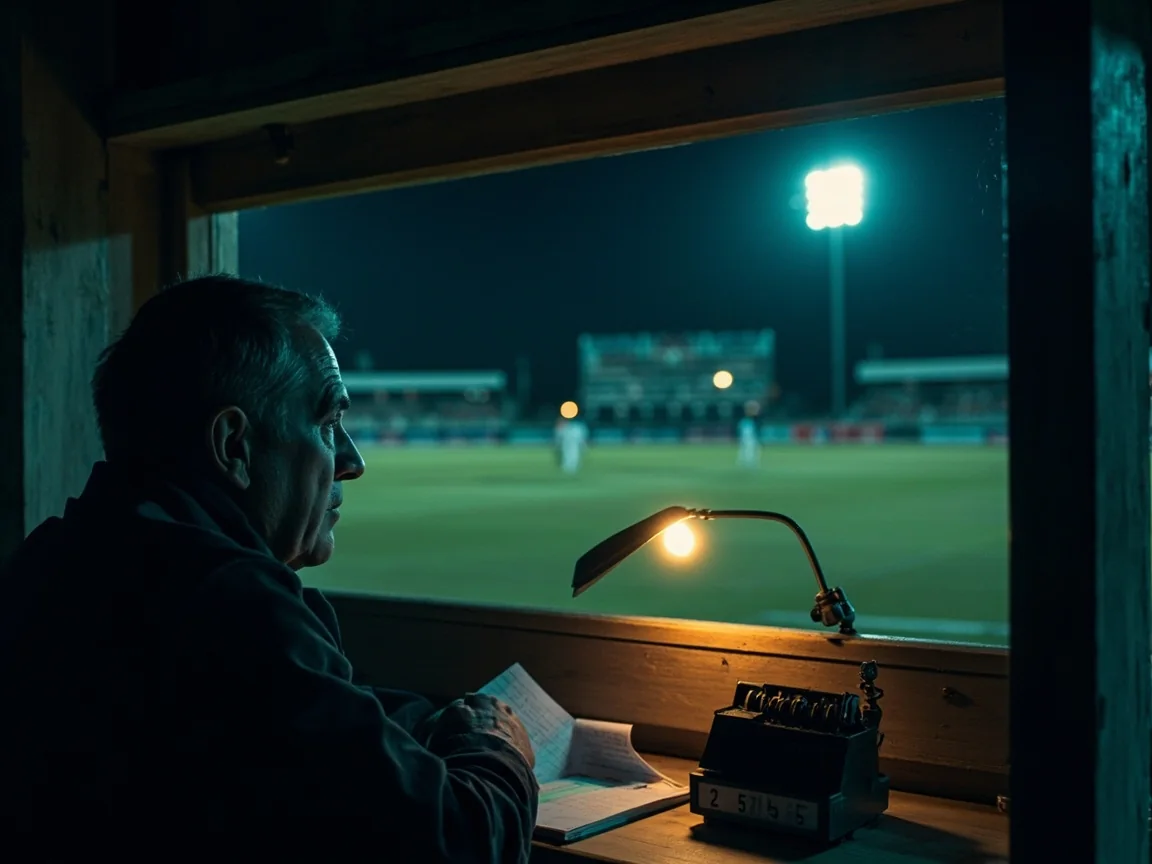
Reading the conditions, not the offer.
Every desk write-up begins with conditions — pitch, weather, confirmed XI — before any captaincy logic. Skipping this step is the most common reason analysis goes wrong.
The five most common tournament-analysis pitfalls
Pitfall 1: Treating all formats the same. T20 leagues, ODIs, and Tests have different role demands, captaincy leverage, and points curves. Tournament-specific analysis is non-negotiable.
Pitfall 2: Ignoring travel and fatigue. A team that has travelled from a different time zone has a 10-15% performance penalty in the first match. Track travel.
Pitfall 3: Overlooking rotation. A franchise that rotates 2 players produces 28 starts; one that does not produces 14. Rotation patterns affect fantasy picks.
Pitfall 4: Trusting format averages over recent form. A team that averaged 170 last season may average 150 this season due to a player departure. Update tournament-level analysis each season.
Pitfall 5: Skipping the post-tournament review. Every tournament should be reviewed at the end. The review is where the desk's tournament-level analysis compounds.
Quick reference: the tournament-fit checklist
T20 leagues: role balance 1 wk, 3-4 bat, 2-3 AR, 3-4 bowl; captaincy is the highest leverage decision.
ODIs: role balance 1 wk, 3-5 bat, 1-3 AR, 3-5 bowl; captaincy is a 1.5× decision.
Tests: role balance 1 wk, 5-6 bat, 0-1 AR, 4-6 bowl; captaincy is a floor decision.
Travel and rotation: track both across the tournament. Adjust picks for first-match fatigue and rest patterns.
Tournament rotation: a rotated player is often a value pick in the next match. Track rotation history per franchise.
Where to go next with tournament analysis
If you take one thing from this desk, take the format-fit habit. Every tournament pick should be checked against the format. A T20 pick and a Test pick are different decisions.
Tournament analysis compounds across a season in a way that single-match analysis does not. A format-first read on day 1 tells you what to expect for the next 14 matches.
Subscribe to the COME weekly briefing for tournament-level updates, rotation patterns, and format-fit reads delivered every Monday.
Editorial standards require that every team-level claim is verifiable. The COME desk tracks team-level statistics against named sources and updates the database weekly.
Team analysis is most valuable at the start of a tournament. Read the team profiles before the first match, then update your read as the tournament progresses.
If you take one thing from this desk, take the cross-reference habit. Every player-level pick should be checked against the team-level pattern.
The COME desk publishes format-specific analysis for every major tournament in the calendar. The analysis includes role demand, captaincy leverage, points curves, and rotation patterns.
If you want team-level context, the Teams desk cross-references tournament analysis against team profiles. Tournament analysis tells you what to expect from the format; team analysis tells you who delivers within the format.
The Players desk maintains a role-by-role database that adjusts for tournament format. A T20 league and a Test series have different role demands; the player-level picks should reflect those differences.
Quick answers from the desk
How is tournament analysis different from match analysis?
Tournament analysis is the foundation; match analysis is the detail. The tournament-level analysis tells you which roles to prioritise across the calendar; the match-level analysis tells you which players to pick for this specific fixture.
Do you cover every cricket tournament?
We cover every major international tournament and every active T20 league. Lower-tier tournaments are covered only if the desk has the time to do the analysis properly.
How do you handle tournament rotation?
The desk tracks rotation patterns for every franchise and updates fantasy recommendations weekly. A rotated player is often a value pick in the next match.
Are the fantasy points rules different across tournaments?
Yes. The COME desk maintains a separate points-curve analysis for each tournament format. The T20 curve is steep at the top; the 50-over curve is balanced; the Test curve is flat.