Live Matches: Confirmed Teams, In-Game Context, Role Tracking
Tonight’s matches, confirmed XIs, in-game role tracking, and what to watch when conditions change mid-innings.
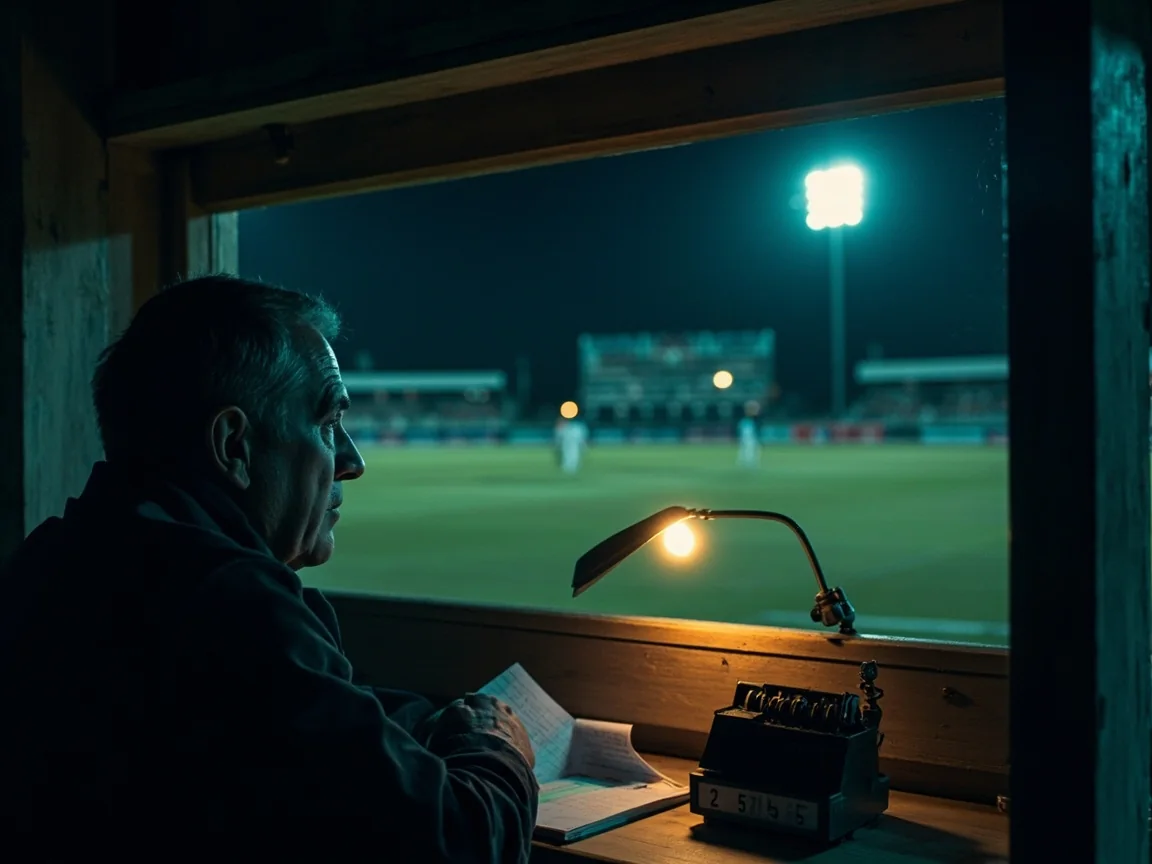
Live Matches: Confirmed Teams, In-Game Context, Role Tracking
Tonight’s matches, confirmed XIs, in-game role tracking, and what to watch when conditions change mid-innings.
What the live desk actually does
The COME live desk tracks tonight’s fixtures in real time. The desk does not chase every wicket — it tracks the patterns that affect fantasy and prediction: powerplay scoring rates, middle-overs acceleration, death bowling economy, and late-innings momentum shifts.
A live desk that publishes a wicket-by-wicket feed adds noise without adding information. The COME desk publishes only the updates that change the picture — a wicket that breaks a partnership, a bowling change that swings an over, a dew shift that flattens the spin.
The live desk does not chase every wicket because the volume of wicket alerts would drown out the substantive updates. The desk updates on a 5-minute cycle by default, and accelerates the cycle when the picture changes materially. This rhythm is designed to match how a fantasy player consumes information during a live match.
The live desk also publishes confirmed XIs and toss decisions ahead of the first ball. These are the most valuable inputs to fantasy decisions, and we treat them as the foundation of the live coverage.
Live context: reading the match in progress
Reading a live match requires the same discipline as pre-match analysis. The four lenses — pitch, weather, conditions, captaincy — still apply, but the inputs change mid-match.
A pitch that looked flat at the toss may start turning by over 12. The COME desk watches the first six overs carefully — if the spinners are getting purchase by over 8, the chase becomes harder for the second batting side.
Bench players matter for substitution rules. If the contest allows one substitution per XI, knowing who is on the bench (and what role they cover) is the difference between a strong and a fragile fantasy team. The desk tracks bench composition alongside the confirmed XI.
Weather shifts matter more in the second innings. A dew break at the end of the first innings can change the chase dramatically. The desk flags dew shifts within 5 overs of when they become visible.
A useful pattern: trust the first six overs. If the captain who chose to bowl is taking wickets in the powerplay, the prediction is on track. If the captain is going at 7+ runs per over, something is wrong — often the pitch, sometimes the bowling order.
Confirmed teams and bench impact
The confirmed XI is the single most important input to any fantasy decision. A preview that does not update for the confirmed XI is a preview that does not respect its reader.
The COME desk publishes the confirmed XI in the live ticker as soon as both teams have announced. The desk also flags any surprises — a debutant in the XI, a senior player dropped, a bowling order reshuffle.
Momentum is the most misused word in live cricket coverage. Real momentum is a measurable shift in run rate or wicket frequency that exceeds the expected variance of the format. A team that goes from 5 to 7 runs per over in the death overs has momentum. A team that takes two wickets in three overs has momentum. Anything else is noise.
Bench players matter for substitution rules. If the contest allows one substitution per XI, knowing who is on the bench (and what role they cover) is the difference between a strong and a fragile fantasy team.
A common mistake: trusting pre-match projections for a player who was dropped at the toss. Projections do not update for the toss. The COME desk updates its projections within minutes of the confirmed XI.
Momentum, field setting, and late-innings reads
Momentum is the most misused word in live cricket coverage. Real momentum is a measurable shift in run rate or wicket frequency that exceeds the expected variance of the format.
A team that goes from 5 to 7 runs per over in the death overs has momentum. A team that takes two wickets in three overs has momentum. Anything else is noise.
Field setting is the second-most underrated live input. A captain who sets an attacking field in the 12th over is signalling that they expect the batter to attack; a captain who sets a defensive field is signalling that they expect the spinner to hold one end. The desk tracks field-setting changes as a leading indicator.
The COME desk tracks momentum using two numbers: current run rate vs expected run rate, and wickets in the last 5 overs vs expected. When both numbers diverge from expectation in the same direction, momentum is real.
Field setting is the second-most underrated live input. A captain who sets an attacking field in the 12th over is signalling that they expect the batter to attack; a captain who sets a defensive field is signalling that they expect the spinner to hold one end. The desk tracks field-setting changes as a leading indicator.
Rain delays and DLS
Rain delays are the most disruptive event in live cricket. They compress the contest, they reset momentum, and they introduce the DLS par score — which is a statistical estimate, not a guarantee.
The COME desk flags rain delays within minutes of the covers going on, and updates its prediction when the delay ends. We also flag when the DLS par score is likely to overvalue or undervalue the chasing side.
In shortened contests, the chasing side has historically underperformed the DLS par. This is because the par is calculated off historical averages rather than the specific batting order. The desk flags this in the live ticker. Practical advice: if the contest is shortened, drop your premium all-rounder in favour of a premium batter or specialist bowler.
A useful pattern: in shortened contests, the chasing side has historically underperformed the DLS par. This is because the par is calculated off historical averages rather than the specific batting order. The desk flags this in the live ticker.
Practical advice for fantasy players: if the contest is shortened, drop your premium all-rounder in favour of a premium batter or specialist bowler. The points curve in shortened contests rewards ceiling players more than role-balanced ones.
Post-match review
The live desk turns into the review desk at the end of the match. The review answers three questions: was the prediction right, what changed during the match, and what did we learn for next time.
The COME desk publishes the review within 12 hours of the match closing. The review is a learning artefact, not a victory lap or a justification. If we got the prediction wrong, we say so.
The live desk turns into the review desk at the end of the match. The review answers three questions: was the prediction right, what changed during the match, and what did we learn for next time. The COME desk publishes the review within 12 hours of the match closing.
A useful pattern: read the review before the next match in the series. The conditions read often carries over, and a lesson from match 1 is valuable context for match 2.
Reading the conditions, not the offer.
Every desk write-up begins with conditions — pitch, weather, confirmed XI — before any captaincy logic. Skipping this step is the most common reason analysis goes wrong.
The five most common live-desk pitfalls
Pitfall 1: Chasing every wicket. Wicket-by-wicket alerts add noise without adding information. Update on a 5-minute cycle, and accelerate when the picture changes.
Pitfall 2: Trusting pre-match projections past the toss. Projections do not update for the toss or confirmed XI. Re-derive after both.
Pitfall 3: Misreading dew and weather. Dew at night neutralises spin; cloud cover assists swing. Both are visible inputs that change the live prediction by 10-15%.
Pitfall 4: Treating momentum as a feeling. Real momentum is a measurable shift in run rate or wicket frequency that exceeds the expected variance.
Pitfall 5: Skipping the post-match review. Every live update should be reviewed at the end of the match. The review is where the live desk's learning compounds.
Quick reference: the four moments to watch
Moment 1: First over of each innings — read the conditions, the swing, the pitch response.
Moment 2: 6-over mark (powerplay summary) — run rate, wickets, momentum shift.
Moment 3: 12-over mark (middle-overs acceleration) — spin purchase, batting depth, captaincy.
Moment 4: 18-over mark (death overs) — yorkers, slower balls, death-over specialists.
These four moments give you 80% of the information you need to update fantasy predictions during a live match.
Where to go next with the live desk
The live desk updates through every fixture across the calendar. The desk updates on a 5-minute cycle, accelerates on material changes, and publishes a post-match review within 12 hours.
If you want pre-match context before tonight's fixtures, the Predictions desk publishes condition-led previews 24-48 hours before each match. The previews include pitch reads, weather assessments, and captaincy logic aligned with the live ticker.
The Fantasy Tips desk publishes differentials and captaincy splits before every major contest. Combine the live ticker with the pre-match preview and the captaincy splits for a complete picture.
Quick answers from the desk
How often does the live desk update?
The COME live desk publishes an update whenever the picture changes materially — confirmed XI, toss, key wicket, dew shift, bowling change, rain delay. We do not publish wicket-by-wicket noise.
Where can I follow the live coverage?
On this page and on the COME social channels. We do not run a separate live blog; the live ticker is built into the live-match hub.
Do you cover every match?
We cover every listed fixture where the desk has a view. Lower-tier contests may be covered only by a short ticker rather than a full preview.
Can I trust live updates during rain delays?
Yes. The desk flags rain delays within minutes of the covers going on. When play resumes, the desk updates its prediction based on the revised target and the conditions.