AUS-W vs SA-W WT20 World Cup 2026 — Match 3 Preview: Old Trafford, Form Lines and Toss Logic
Australia Women meet South Africa Women in the third match of the ICC Women's T20 World Cup 2026 at Emirates Old Trafford — a Group A fixture that can reshape the race for the group top spot.
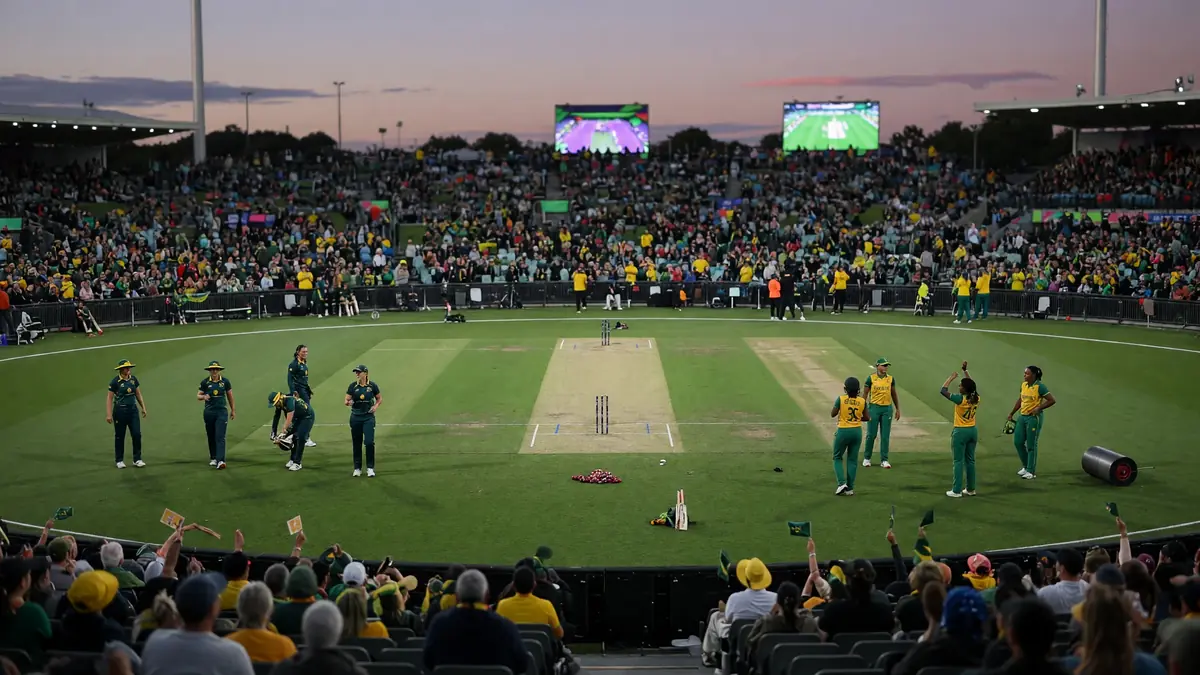
The COME desk treats this fixture as a conditions-and-form read rather than a reputation contest. Australia still own the historical ledger; South Africa arrive with recent finalist pedigree and a sharper current batting pulse. Old Trafford sits between those two stories.
Australia Women face South Africa Women in Match 3 of the ICC Women's T20 World Cup 2026 at Emirates Old Trafford, Manchester, with a stated start around 7:00 PM IST. The fixture is framed as a Group A meeting between two title contenders, the sort of early-group game that can decide who controls the path to the semi-finals rather than merely padding a points table.
The source analysis behind this preview was published on 13 June 2026. The desk uses that body of numbers — head-to-head, World Cup history, named player form and the Old Trafford notes — as the factual ceiling. Where a detail is not in that record, the reasoning stays conditional.
Why Match 3 carries group-table weight
Group A does not forgive slow starts. Two sides with World Cup pedigree meeting in the third fixture of the tournament means the winner banks early separation and the loser is already managing a recovery path. The preview treats both teams as title contenders, not as a favourite-and-underdog pair.
That framing matters for how the rest of the read is built. If the contest were a dead rubber, historical Australia dominance would be enough to close the conversation. Because the group topper race is live, form lines, pitch behaviour and toss preference sit above reputation. The COME desk starts every World Cup preview the same way: name the table stakes, then test whether the conditions still favour the side the history book prefers.
For fantasy captains and prediction readers alike, early-group games also carry cleaner role information. Roles are not yet scrambled by injury or rotation panic, and the conditions notes for a new venue still carry more weight than mid-tournament fatigue. Match 3 at Old Trafford fits that pattern.
Head-to-head: what the ledger actually says
The overall women's T20 head-to-head cited in the analysis runs to 11 meetings: Australia 9 wins, South Africa 2. That is a clear historical lean, and it is the number most casual previews will lead with.
The last five encounters tighten the picture. Australia hold a 3–2 edge across those five, which is still a lead but no longer a wipeout. In Women's T20 World Cup meetings specifically, the body cites eight prior clashes: Australia 7 wins, South Africa 1. World Cup history still belongs to Australia; recent bilateral form is more competitive.
The practical read is simple. Australia remain the side you default to when information is thin. South Africa are no longer the side you write off once the powerplay is done. A 9–2 career ledger and a 3–2 recent split are different statements, and Match 3 sits closer to the second than the first.
For prediction work, the head-to-head is a baseline, not a captaincy variable. It sets the prior probability. The pitch, the weather and the named form lines are what move that prior.
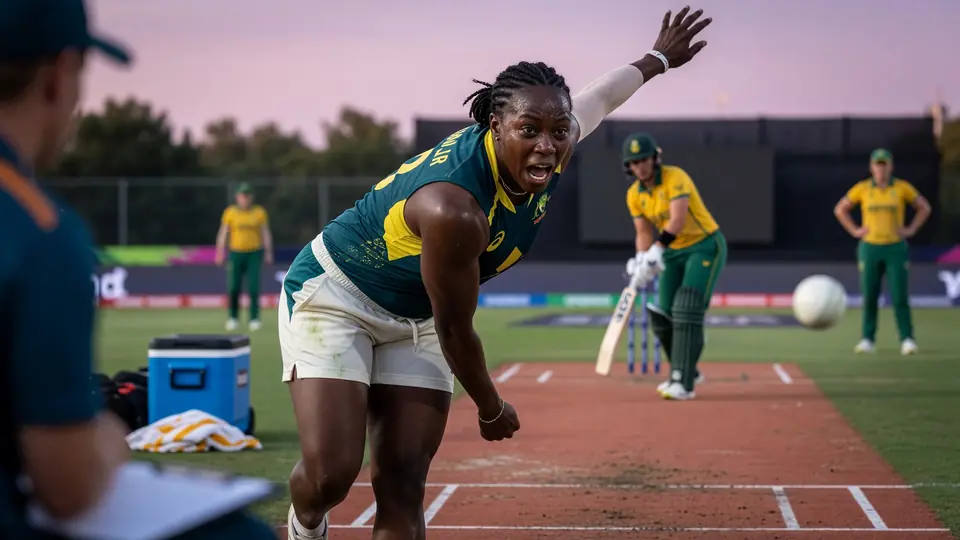
Australia after the captaincy change
The analysis describes Alyssa Healy as retired from international cricket, with Sophie Molineux named as Australia's new captain. That single leadership change reshapes how the top order and the middle overs are read, because Healy's dual role as opener and keeper had long been the spine of Australia's T20 shape.
Beth Mooney's Women's T20 World Cup record is given as 752 runs in 28 matches at an average of 41.7. That is the clearest batting anchor the Australian side still carries into this tournament. On a balanced Old Trafford surface, Mooney's floor matters as much as her ceiling: a player who averages above 40 across a World Cup sample is the name the desk trusts when the contest turns into a chase or a rebuild after early wickets.
Ellyse Perry's World Cup contribution is cited as 503 runs and 40 wickets. Perry remains the all-round hinge — the player whose bowling overs and middle-order batting both clear a fantasy and prediction floor even when one discipline is quiet. Megan Schutt is cited with 152 T20 career wickets and 49 Women's T20 World Cup wickets, one short of 50. That World Cup tally is not trivia; it marks Schutt as the new-ball and death option Australia still lean on when the surface offers seam or when the innings needs a wicket at the death.
The Australian shape, on those numbers alone, is still deep. The open question the source leaves unresolved is how quickly the side settles under Molineux's captaincy in a live World Cup group game, not in bilateral warm-ups. Leadership transitions rarely show in the first over; they show in the twelfth over of a chase, when field placement and bowling changes need a settled voice.
South Africa: finalist pedigree and a hotter batting pulse
South Africa are described as recent ICC finalists who lost the 2023 final at home and another final to New Zealand in the 2024 Women's T20 World Cup. Two finals in consecutive major cycles is not a fluke sample. It is a side that knows how to reach the last day and is still hunting the closing step.
Laura Wolvaardt's recent form is the sharpest single batting line in the preview: 330 runs in her last five matches at an average of 82.5 and a strike rate above 116, plus 563 runs in 19 Women's T20 World Cup matches. That combination — elite recent scoring and a solid World Cup aggregate — is why the form lean in the analysis does not automatically sit with Australia.
With the ball, Shabnim Ismail is listed as returning, carrying 43 World Cup wickets. A returning new-ball spearhead changes the first six overs for any chase or bat-first plan. Nonkululeko Mlaba is cited with 16 wickets in her last 12 matches at an economy of 7.4. Mlaba's sample is the middle-overs lever: wickets at a manageable economy on a ground where spinners have already taken a heavy share of the limited T20 wicket pool.
Put together, South Africa's argument is not historical parity. It is current batting form at the top, a returning strike bowler, and spin that has been taking wickets at a usable rate. That is enough to turn a 9–2 historical ledger into a live contest on the night.
Old Trafford: pitch, spin share and the toss lean
The pitch notes describe Old Trafford as traditionally balanced, with an average first-innings score about 150–160. That band is the first constraint on any prediction. It is not a 180-plus batting deck, and it is not a sub-130 bowler's graveyard. Captains who build around a single explosion innings are over-fitting; captains who build around 155 and wickets through the middle are closer to the surface.
Only two prior T20s are cited at the venue. Across those, 13 of 18 wickets fell to spinners, and the bat-first and chase sides split one win each. The sample is tiny, so the desk treats it as a directional note rather than a law. Still, a 13-of-18 spin share is too large to ignore when both sides carry wrist-spin and finger-spin options that have already been named in the form lines.
Weather in the analysis points to a light rain chance, temperatures around 11–16°C, and humidity near 67%. Cool, slightly damp English evenings often keep the new ball honest for longer than a dry subcontinental night. The chasing side is said to hold a slight Old Trafford edge, so toss winners may prefer bowling first. That is the cleanest single tactical sentence in the preview: if the coin falls your way, take the ball and chase.
For readers building a match prediction, the toss lean and the spin share are the two variables that should move the needle after the head-to-head is set. A side that wins the toss and bowls first on a 150–160 surface with spin in the middle overs is playing the ground, not the reputation board.
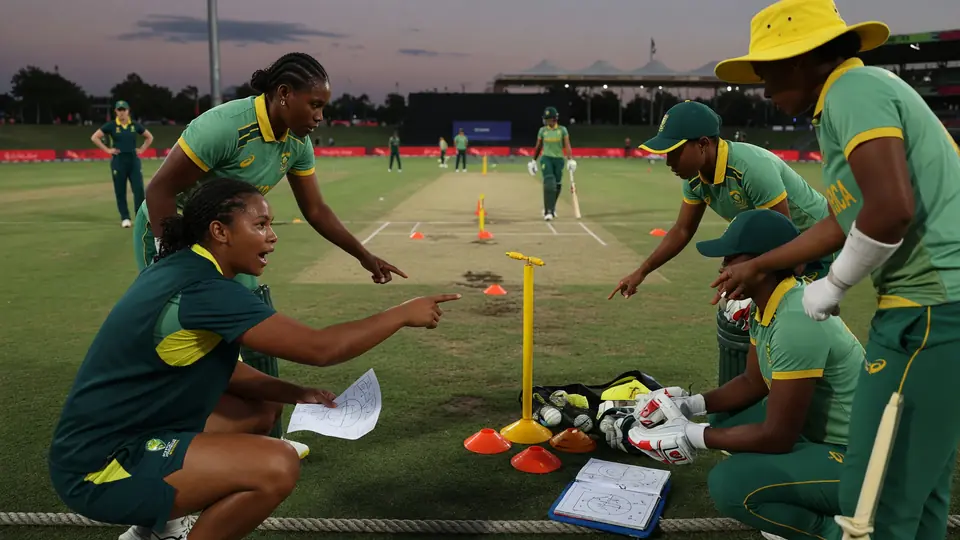
How the two attacks match the surface
Australia's bowling story in the source sits on Schutt's World Cup wicket pile and Perry's dual contribution. That points to a new-ball and middle-overs plan that can still work on a balanced deck: early wickets with the new ball, control through the middle, and all-round overs that do not leak when the batter sets.
South Africa's bowling story sits on Ismail's return and Mlaba's recent 16 wickets in 12 matches. Ismail addresses the powerplay. Mlaba addresses the spin share the ground has already shown. On a surface where 13 of 18 recorded T20 wickets went to spin, Mlaba's economy of 7.4 is more than a supporting number — it is a reason the chase can be choked if the top order does not break the game open early.
Neither side is short of bowling options on paper. The edge, if there is one, is about who better uses the toss. A team that bowls first and keeps the chase under 160 is playing Old Trafford's average. A team that bats first and posts 170-plus is beating the ground average and forcing the other side into a higher-risk chase.
Batting anchors and where the contest breaks
Mooney's World Cup average of 41.7 across 28 matches is Australia's stabiliser. Wolvaardt's 330 runs in five matches at 82.5 is South Africa's accelerator. Those two lines describe different jobs. Mooney wins games by refusing collapse. Wolvaardt wins games by making 150 look small before the fifteenth over.
Perry's 503 runs and 40 World Cup wickets give Australia a second batting gear if the top order is quiet. South Africa's second batting gear is less explicitly numbered in the source, which is why the form lean toward South Africa rests so heavily on Wolvaardt's recent sample rather than on a deep batting ledger.
The break points the desk watches are familiar. First: the powerplay wicket count, especially if Ismail takes the new ball. Second: the spin window between overs 8 and 15, where Mlaba and Australia's own spin options will decide whether 150 is defendable. Third: the death overs if the chase is still live past 16 — Schutt's road to a 50th World Cup wicket is a narrative detail, but her actual job is still the same: finish innings.
Prediction framework: 50-50 paper, form lean to South Africa
The final lean in the source analysis is explicit. On paper the contest is roughly 50-50. Current form tilts toward South Africa Women. That is not a blanket pick against Australia's history; it is a form-weighted call that treats Wolvaardt's recent scoring, Ismail's return and South Africa's finalist experience as enough to neutralise Australia's 9–2 T20 ledger and 7–1 World Cup ledger for one night in Manchester.
The COME desk restates that lean with the conditions attached. If South Africa win the toss and bowl first on a 150–160 surface with spin in the middle, the form lean has a clear path. If Australia bat first, post above the ground average, and Schutt plus Perry keep the chase honest, the historical prior reasserts itself. A prediction that refuses to name those conditions is just a coin flip with better adjectives.
Readers who want a single sentence can take this one: slight preference to South Africa on current form, with the toss and the spin share still able to swing the night back to Australia. Anything stronger than that over-claims what the source numbers support.
What to watch before the first ball
Three checks remain open until the toss. Confirm whether Ismail is fit to take the new ball — her return is listed, but listed and bowling the first over are not the same event. Confirm Australia's top-order shape under Molineux now that Healy is retired from international cricket. Confirm the actual pitch colour and grass cover two hours before start; the 150–160 average is a venue band, not a Match 3 measurement.
Once those three are known, the prediction framework above holds. Until then, the honest public call stays where the source left it: even on paper, form leaning South Africa, Old Trafford offering a slight chase edge to the side that wins the toss and takes the ball.
For a wider set of fixture reads built the same way — pitch first, form second, reputation last — the desk's ongoing match predictions coverage keeps the same conditions-led method across the calendar.
Read the ground before the reputation board.
Old Trafford's 150–160 first-innings band and the spin share from the tiny T20 sample are the two numbers that should sit above Australia's historical ledger when the toss is still live.
Quick answers about Match 3
When and where is AUS-W vs SA-W Match 3?
Australia Women face South Africa Women in the third match of the ICC Women's T20 World Cup 2026 at Emirates Old Trafford, Manchester, with a stated start around 7:00 PM IST.
What does the head-to-head record say?
Across women's T20 meetings the cited record is 11 games: Australia 9, South Africa 2. World Cup meetings are cited as eight prior clashes (Australia 7, South Africa 1). The last five encounters split Australia 3, South Africa 2.
How does Old Trafford tend to play?
Traditionally balanced, average first-innings score about 150–160. Only two prior T20s are cited, with 13 of 18 wickets to spinners and one win each for bat-first and chase sides. Chasing holds a slight edge, so toss winners may bowl first.
Which way does the preview lean?
Roughly 50-50 on paper, with current form tilting toward South Africa Women. The lean is form-weighted, not a dismissal of Australia's historical edge.
Related coverage from the desk
Match Predictions
Pre-match reading for every listed fixture.
Open previews →Fantasy Cricket
Role balance, captaincy logic, and the math behind a strong XI.
Open desk →Fantasy Tips
Captaincy splits, differentials, and small rules that decide leagues.
See tips →Live Matches
Confirmed teams, in-game role tracking, and what to watch when conditions change mid-innings.
Open live desk →