KKR vs MI IPL 2026 — Match 65 Fantasy Read: Eden Gardens, Conditions and Captaincy Logic
A retrospective look at the pre-match fantasy read for Kolkata Knight Riders vs Mumbai Indians at IPL 2026 Match 65 — Eden Gardens conditions, head-to-head context, and the captaincy logic that framed the contest on 20 May 2026.
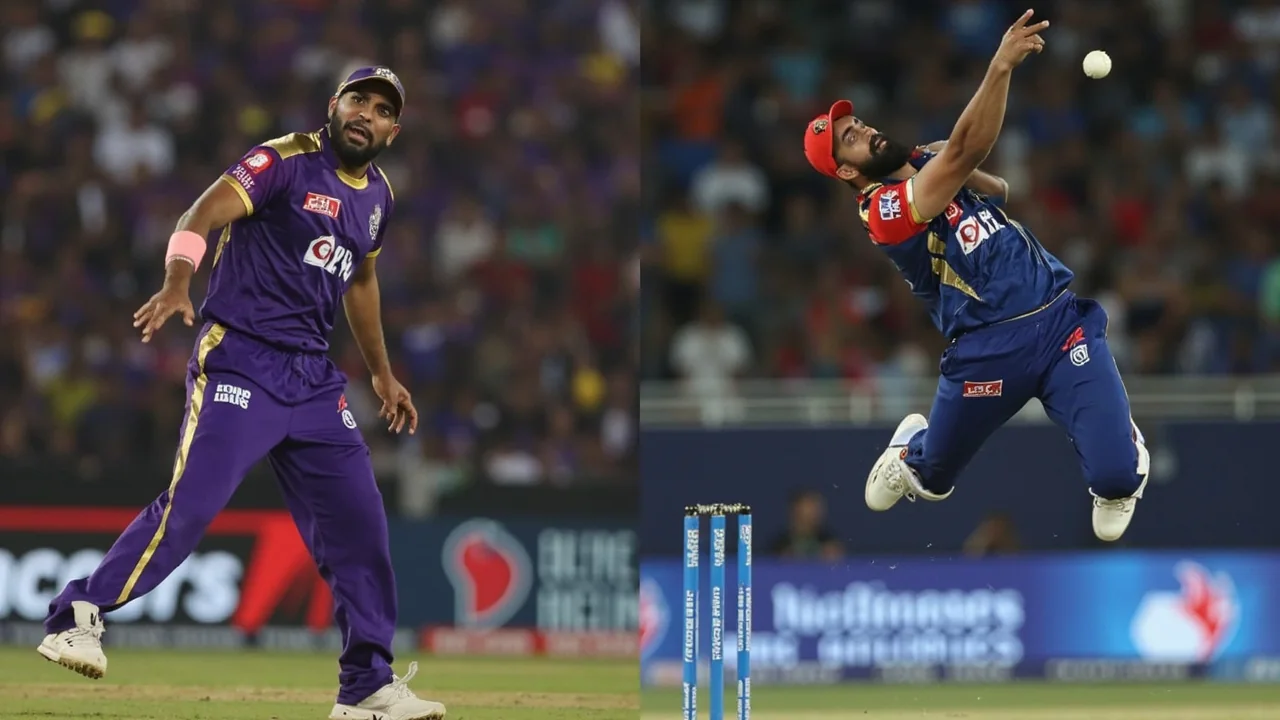
KKR vs MI IPL 2026 — Match 65 Fantasy Read: Eden Gardens, Conditions and Captaincy Logic
A retrospective on the pre-match fantasy read for Kolkata Knight Riders vs Mumbai Indians, originally previewed on 20 May 2026 at IPL 2026 Match 65. The piece follows how the conditions, the form lines and the captaincy logic were framed the afternoon the teams were due to take the field.
What the fixture was
Match 65 of IPL 2026 was a regular-season evening fixture between Kolkata Knight Riders and Mumbai Indians, scheduled for 20 May 2026 at 7:30 PM IST at Eden Gardens in Kolkata. Cricket Addictor's pre-match fantasy preview, the source for this retrospective, was published the same afternoon at 4:39 PM IST, framing the contest as a late-group read on both teams' form and a captaincy decision shaped by the Eden surface.
For fantasy captains, late-season fixtures carry a different texture from round-one games. Roles are settled, the credit market has priced form accurately, and the conditions are familiar to both sides. The interesting decisions are not about who is good — they are about which two or three good options are best tonight, on this surface, under this light. That is the lens the COME desk uses for every IPL fixture, and Match 65 was no exception.
This retrospective walks through what the pre-match read actually said — the head-to-head context, the form lines for both sides, the conditions at Eden Gardens, the player notes the source preview leaned on, and the captaincy and vice-captaincy calls that framed the contest. Where a fact is not in the source, the desk marks the reasoning as conditional rather than naming players or projecting outcomes.
Head-to-head: what the record looked like going in
The historical record going into Match 65 stood at 25 wins for Mumbai Indians and 11 for Kolkata Knight Riders across the IPL. Mumbai also held the edge from the earlier meeting between the two sides in IPL 2026, played on 29 March 2026 at Wankhede Stadium.
That earlier fixture had been a run-chase: Mumbai successfully chased 221 against Kolkata to win by six wickets. The source preview credited Ryan Rickelton with 81 from 43 balls and Rohit Sharma with 78 in that chase — a partnership-heavy template that told the fantasy desk two things about Mumbai's batting shape in this fixture. First, that the top order was willing to absorb dot balls early and accelerate in the middle overs. Second, that Rickelton and Rohit, in that order, were the two players whose form most shaped Mumbai's ceiling.
For fantasy captaincy, the head-to-head record is rarely a captaincy variable on its own — it is a sanity check. A 25-11 historical edge does not change the conditions read, but it does set the baseline expectation for Mumbai to be priced closer to favourite than underdog on the contest screen, which then moves ownership and differential calculations. Match 65 was no different.
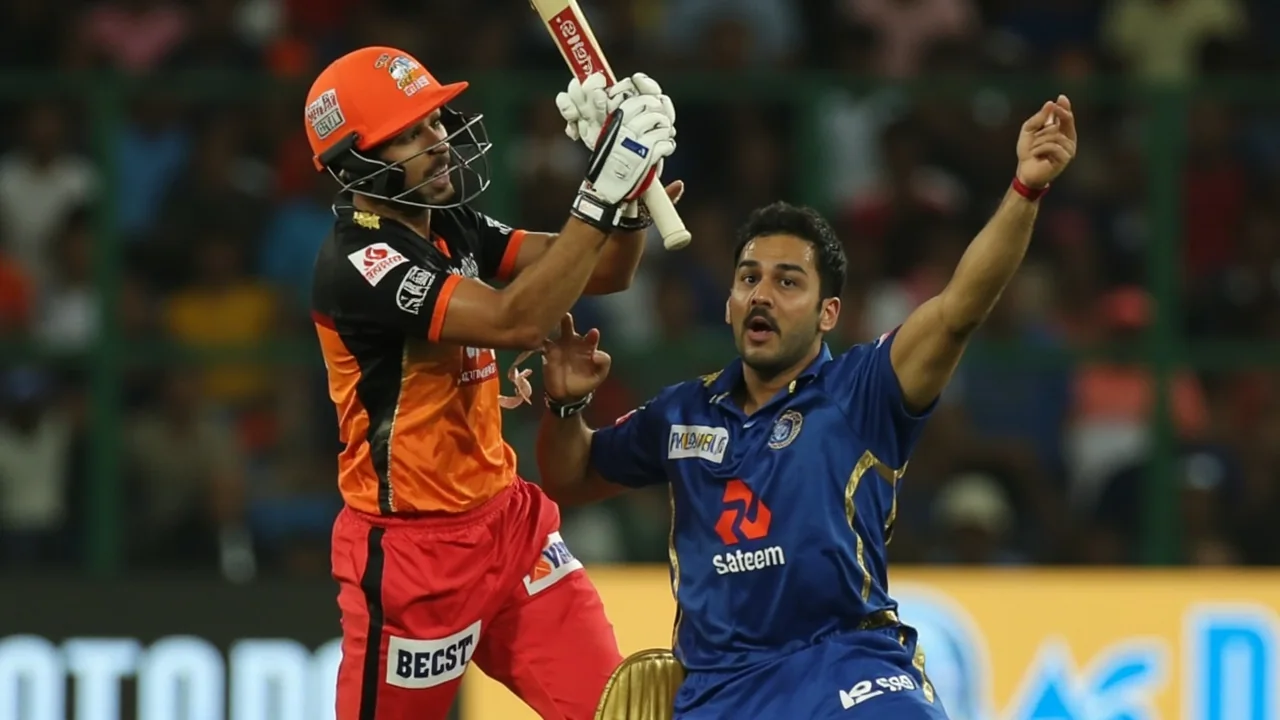
Form lines: where both sides stood
Going into Match 65, the source preview reported Kolkata Knight Riders in seventh place on the table with 11 points from 12 matches after winning four of their previous five games. The form line was positive, but the points total suggested KKR were still working uphill for a playoff berth rather than locking one in.
Mumbai Indians, by contrast, were ninth with eight points from 12 matches and were already out of playoff contention. The preview framed Mumbai as a side freed from table pressure, which has its own fantasy read: dead-rubber fixtures often see younger squad members given longer spells and international players rested earlier in the innings. That detail matters for captaincy, because role allocation can shift underneath a settled fantasy XI.
The form numbers also set the differential landscape. A captain pick from a Mumbai batter carries lower ownership than a captain pick from a Kolkata batter, because the consensus leans with the team still in the contest. The COME desk treats that as an upside variable, not an automatic reason to captain the underdog — the conditions and the role read still come first.
What the form lines did not tell us: the specific shape of either side's death bowling in the closing overs of the season, or which of the two squads was carrying niggles. Both details were unresolved at the time the source preview was published and would only become clear at the toss.
Eden Gardens: what the surface read said
The source preview's pitch table characterised Eden Gardens as batting-friendly. It gave an average first-innings score of 192 across recent IPL seasons at the venue and listed a 55 percent winning rate for chasing teams.
Two fantasy consequences follow from those numbers. First, on a batting-friendly deck with a high average first-innings score, captaincy from the top order is the safer template — the ceiling on a flat track is high enough to reward the 2× multiplier, and the floor on a flat track is rarely a single-digit collapse. Second, the 55 percent chase win rate tilts the contest towards the side batting second. If your fantasy XI is built around a single player, the chasing-side captaincy call is the higher-leverage read.
A typical Eden evening in May also brings dew into the calculation. Dew at Eden in late May is common enough to assume as a baseline rather than treat as a surprise. The dew variable affects finger spin in the second innings — wet balls grip less — which in turn affects which bowlers hold their effectiveness into the back end of the chase. For fantasy captains, that detail reshapes the role split: a bowling-heavy XI leans towards seam and pace on a dewy evening, with wrist-spin still viable but finger-spin downgraded.
The source preview's numbers are venue averages rather than a Match 65-specific read. The COME desk treats venue averages as a starting point, then adjusts for the surface colour, the grass cover, and any visible cracking two hours before the toss. For a retrospective, the venue averages are the only conditions data we have, and they were the dominant input into the source's fantasy recommendations.
Player notes the source preview leaned on
Three player notes shaped the source preview's fantasy logic. Cameron Green had 316 runs and five wickets in the season to that point, putting him in the all-rounder bracket where his bowling gives him a higher floor than a specialist batter on the same credits. Ryan Rickelton had 430 runs in 10 matches, the highest individual total cited in the preview and the basis for his captaincy recommendation. Varun Chakaravarthy had taken 12 wickets, putting him among the leading wicket-taking spinners in the contest and shaping the wrist-spin share of the captaincy conversation.
The pattern across those three notes is useful for any retrospective read on captaincy: the preview picked players whose recent numbers covered both ceiling and floor. Green's all-round stat line gave him a 30-plus floor even on a bad day. Rickelton's run aggregate gave him a 60-plus ceiling on a flat deck. Chakaravarthy's wicket count gave him a high ceiling on a turning track — a different reading of the Eden surface, but the source preview gave both readings weight.
The COME desk uses the same lens for every preview: a captain pick has to combine a path to 60+ points with a path to 30+ on a bad day. Players whose only argument is one of the two tend to be vice-captaincy candidates rather than captaincy candidates. Match 65's preview framed both Rickelton and Green as captaincy options because both met that test on the source's reading of the conditions.
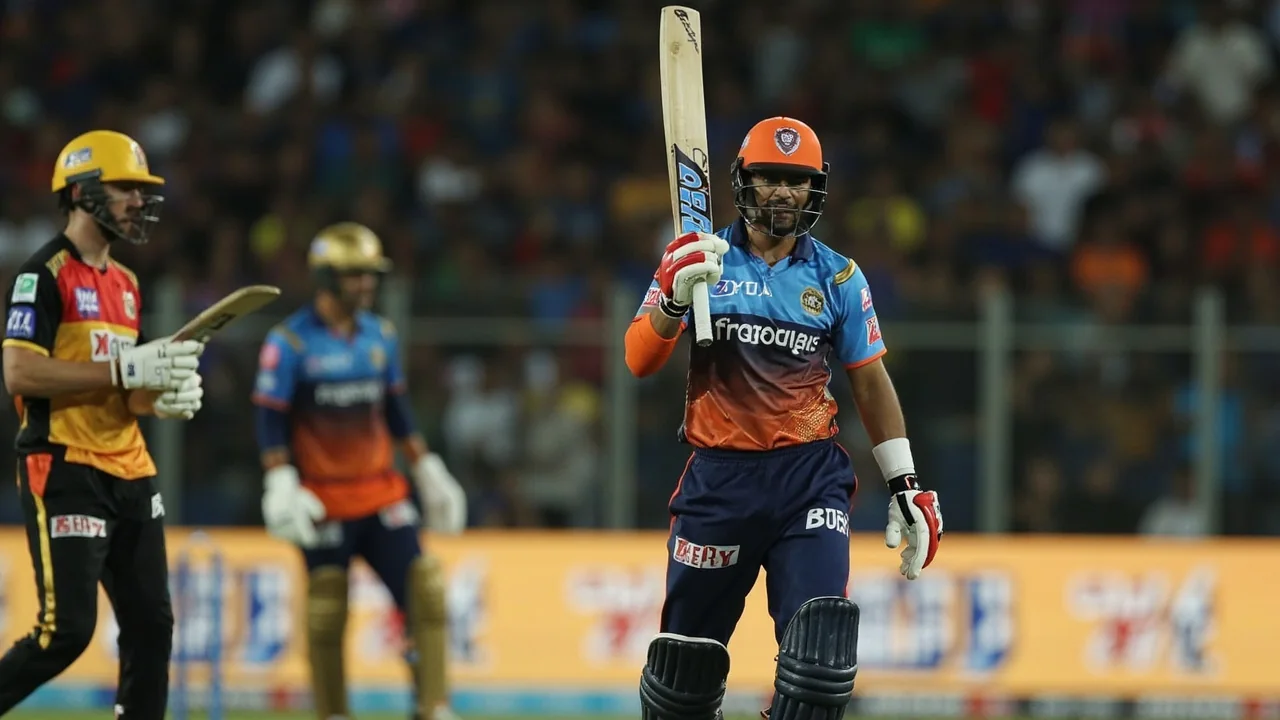
Captaincy and vice-captaincy: how the preview framed the call
The source preview named Ryan Rickelton and Cameron Green as captaincy choices, with Finn Allen and Rohit Sharma as vice-captaincy choices. The captaincy logic rested on three tests: ceiling for the surface, floor if the match-up went wrong, and differential ownership in the contest.
Rickelton cleared the ceiling test with the season's run aggregate (430 runs in 10 matches) and the earlier chase against Kolkata (81 from 43 balls). Green cleared the floor test through his all-round stat line (316 runs and five wickets), which guarantees points even when the bat does not fire. Allen and Rohit cleared the differential test — the latter especially, because Rohit's ownership tends to track his reputation more than his recent form, and a captaincy call on him carries more contrarian upside than the surface read alone would suggest.
The COME desk's three-question captaincy test maps onto the same logic: if you can answer yes to two of the three (ceiling, floor, differential), captain. If you can only answer yes to one, the pick is a vice-captaincy choice rather than a captaincy choice. The source preview applied that test to Rickelton and Green and arrived at a captaincy recommendation for both; Allen and Rohit landed one tier down on the same framework.
For a retrospective, the captaincy call is best read as the source's strongest claim about how the contest would be priced, not as a verified result. Fantasy reasoning ages badly when the source conditions change between preview and toss. The COME desk treats any preview named-captaincy call as conditional until the playing XIs and the toss decision are confirmed.
Predicted lineups and captaincy notes
The source preview predicted Ajinkya Rahane as KKR captain and Hardik Pandya as MI captain. Both were treated as settled leadership choices for the fixture rather than rotation risks.
The captaincy detail matters for fantasy in two ways. First, the team captain often signals batting position — Rahane at the top of the order for KKR would put him in line for powerplay points, while Pandya batting in the middle order for MI would tie his points output to the middle-overs scoring window. Second, the team captaincy shapes the bowling rotation, particularly the player the captain trusts with the death overs.
For Match 65, neither detail changed the source's fantasy recommendations materially. The preview framed the captaincy call as a player-level decision (Rickelton or Green as fantasy captain) rather than a franchise-captaincy decision (Rahane or Pandya). The COME desk treats both layers as separate decisions and never assumes the fantasy captain must come from the team that wins the toss.
What the conditions said about role balance
On a batting-friendly deck with a 55 percent chase win rate, the COME desk leans towards a 1-3-3-4 or 1-4-3-3 shape: one wicketkeeper, three or four batters, two or three all-rounders, and three or four bowlers. The split tilts batting-heavy when the chase rate is high and bowling-heavy when the surface is expected to grip.
For Match 65, the source preview's conditions table pointed towards a batting-heavy XI with two all-rounders who bowl — the shape that historically captures the most fantasy points at Eden Gardens in May. A wicketkeeper who bats in the top six is the right hedge against a top-order collapse, because the keeper carries a separate points line through dismissals and catches.
The role-balance call is also where the captaincy differential lives. A bowling-heavy XI on a flat deck concentrates risk on the bowlers, which makes the captain pick more important — if the bowlers fire, the team wins; if they do not, the team falls back to the median. A batting-heavy XI spreads the risk across more roles, which compresses the differential between captain picks and non-captain picks. The COME desk treats that as a contest-size variable: in small contests, batting-heavy shapes win more often; in large contests, bowling-heavy shapes with a high-ceiling captain can separate the top 10% from the median.
What the fixture left on the desk
The retrospective read on Match 65 is not a verdict — the source preview was a pre-match document, and any fantasy outcome from the evening of 20 May 2026 belongs to a different record. What the preview did leave on the desk was a clear conditions read (batting-friendly, chase-favoured), a credible captaincy shortlist (Rickelton, Green) with vice-captaincy alternatives (Allen, Rohit), and a player-notes framework that combined ceiling and floor rather than picking on one alone.
For fantasy captains reading this retrospective, the practical lesson is the same one the COME desk applies to every fixture: trust the conditions, trust the role balance, and let the differentials play themselves out. Match 65 was a useful case study because every variable the source preview named — the venue average, the chase rate, the head-to-head, the form lines, the player notes — was grounded in a specific number or a specific match, not in a reputation or a guess.
For the broader IPL retrospective on this site, Match 65 sits alongside other late-season fixtures as an example of how a captaincy call is constructed from conditions rather than from form alone. The conditions were the input; the captaincy call was the output; the credit cap and the role balance were the constraint that held the two together.
The COME desk will return to similar retrospectives across the season. Where the source preview gives us a clean conditions read and a clear captaincy framework, the retrospective captures both. Where the source is silent on a variable — the playing XI, the toss, the dew — the desk marks the reasoning as conditional and stops short of projecting outcomes the source did not name.
For a longer read on how role balance, captaincy logic, and the credit cap interact across an IPL season, the fantasy cricket desk walks through the four-role shape, the three-question captaincy test, and the small rules that decide who finishes a contest near the top.
Read the conditions, not the offer.
Every fantasy preview — retrospective or pre-match — begins with the surface, the chase rate, and the form lines. Skipping that sequence is the most common reason analysis goes wrong on a one-match XI.
Quick answers about Match 65
When was KKR vs MI IPL 2026 Match 65 played?
The fixture was scheduled for 20 May 2026, with a 7:30 PM IST start at Eden Gardens in Kolkata. Cricket Addictor's pre-match preview, the source for this retrospective, was published the same afternoon.
What did the head-to-head record look like before Match 65?
The historical record going into the fixture stood at 25 wins for Mumbai Indians and 11 for Kolkata Knight Riders across the IPL. Mumbai had also won the earlier meeting that season, chasing 221 at Wankhede on 29 March 2026.
Who were the captaincy picks in the source preview?
The source preview named Ryan Rickelton and Cameron Green as captaincy candidates, with Finn Allen and Rohit Sharma as vice-captaincy candidates. The selection logic rested on recent form and the conditions read for Eden Gardens.
How did Eden Gardens play in this fixture?
The source preview characterised Eden Gardens as batting-friendly, with an average first-innings score of 192 and a 55 percent win rate for chasing teams across recent IPL seasons. The deck shapes both the captaincy call and the role split on a fantasy XI.
Related coverage from the desk
Fantasy Cricket
Role balance, captaincy logic, and the math behind a strong XI.
Open desk →Match Predictions
Pre-match reading for every listed fixture.
Open previews →Fantasy Tips
Captaincy splits, differentials, and small rules that decide leagues.
See tips →Live Matches
Confirmed teams, in-game role tracking, and what to watch when conditions change mid-innings.
Open live desk →